





The East End in Colour

|
| The East End in Colour, 1960–1980 David Granick, Hoxton Mini Press, 2018, 144 pages, 97 colour plates, hardback. |
This collection of recently discovered photographs is the work of David Granick (1912– 1980), a person hitherto quite unknown in the annals of serious photography. This small volume of his pictures and the exhibition that accompanies the publication will place him among the greats.
The two decades during which he put together this memorial to his native east end of London coincided with the last phase of LS Lowry’s much longer life (1887-1976). By producing stark images of the industrial areas they inhabited, both artists broke new ground, bringing the drab scenery and harshness of life in these completely unfashionable areas into the realm of serious art.
In the aftermath of the bombing and rocket attacks of the second world war, much of London’s east end was reduced to rubble or to buildings scarred beyond reach of reconstruction. When Granick began his records in 1960 some of these ruins still lay abandoned in the side streets, and the first class of his photographs includes a number of these scenes. The post-war era saw a huge loss of population as the Cockneys moved out to new areas being provided in places such as Stevenage and Harlow.
The second class of pictures consists of an endless and painful record of boarded-up rows of late- Georgian or Victorian shops, pubs and houses. For viewers of these pages who do not know the story from London’s recent past, the sets of images here are both graphic and highly informative.
Not all is desolation and decay. The photographs, as in Lowry’s work, also show individuals or crowds going about their daily business: shopping at a market stall, hanging around outside the doors of the pubs that were still in business, drinking tea at a cabbies’ shelter outside a bank or catching red buses, including the fondly remembered Routemasters. Vehicles, fewer then, line the streets or wait in queues or at traffic lights. The car-spotter will have a field day with the Ford Populars and Morris Minors seen here.
A more poignant mood still is struck later. Working, one suspects, in the quietness of Sundays, Granick shows the docks and their barges or steamers in impressionistic scenes of tranquillity, with the soft light reflected in the still water of the Pool of London. Tower Bridge is seen in the first photograph in the book and, looking beyond it to the west, the City’s first skyscrapers make their debut almost timidly on the horizon. In the time since Granick’s death in 1980 this City skyline has been transformed. Elsewhere in the book, the modern tower blocks of housing are seen rising above the zones of clearances or looking over the shoulders of an early-19th-century terrace in the Commercial Road in 1970.
The architectural historian will value the colour recording of the condition of such celebrated streets as those around Spitalfields Market in the 1960s, when still playing host to such businesses as ‘Sydney Young, Furrier’. How many furriers do we still have? Gentrification has come to the rescue of some of this heritage but, for the most part, this small volume is an elegy for a segment of London north of the Thames, and its inhabitants, in its final days.
This article originally appeared as ‘Post-war portfolio’ in IHBC's Context 156 (Page 55), published in September 2018. It was written by Graham Tite, conservation officer.
--Institute of Historic Building Conservation
Related articles on Designing Buildings Wiki
- British post-war mass housing
- Conservation.
- Demolishing Modernism: Britain's lost post-war gems
- Did the successes of British post-war mass housing outweigh its failures?
- England's Post-War Listed Buildings
- Heritage asset.
- Heritage.
- Historic building.
- IHBC articles.
- Mr Barry's War
- The Institute of Historic Building Conservation.
IHBC NewsBlog
IHBC sponsors Gardens Trust event 23-4 Sept 2026
.jpeg)
'Learning from the Past, Shaping the Future’ takes place in Milton Keynes
Renovations to Frank Lloyd Wright's Fallingwater complete
.jpg)
World Heritage Preserved project opens house for tours again
Shakespeare Birthplace Trust places Hall's Croft on HAR Register
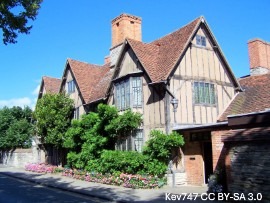
Stratford-upon-Avon home of Shakespeare's daughter is 'At Risk'
Lady Grange’s House repaired on St Kilda
.jpg)
National Trust for Scotland repairs stone cleit with link to famous island resident
Griff Rhys Jones on BBC Radio 4 Today programme
,_Green_Lane,_Derby.jpg)
The Victorian Society’s President unveiled its latest Top Ten Endangered Buildings 2026.
Need a MATE? Book your place now.

IHBC offers free webinars on applying for IHBC accreditation (Full & Associate).
UK Stained Glass Repository finds windows new homes
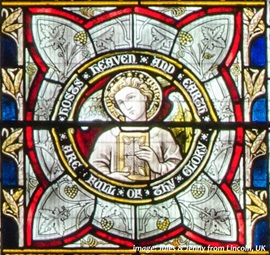
How are stained glass windows are rescued, stored and repurposed?
APPGEBE report sets high aims for quality
'Government must not sacrifice quality in drive to build 1.5m homes'
New measures protect Historic Shipwrecks from heritage crime

Underwater cultural heritage benefits from new HE guidance
How could the City of London skyline look in 6 years' time?

Visualisation shows approved planning applications as completed buildings
National Trust for Scotland calls for VAT cuts
Heritage neglect is encouraged by current policies
IHBC's 'Context' Issue 186 features Industrial Heritage
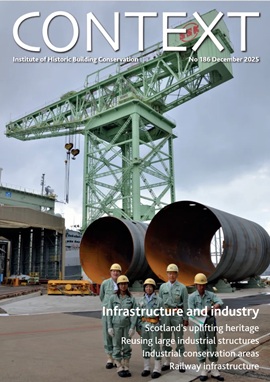
IHBC's members' journal reports on the challenges of conserving infrastructure
Book now for IHBC Annual School 2026

IHBC Annual School is taking place 18-20 June 2026 in Newcastle
RICHeS Research Infrastructure offers ‘Full Access Fund Call’
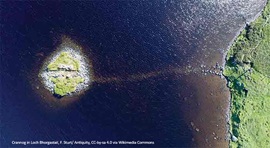
RICHeS offers a ‘Help’ webinar on 11 March
Latest IHBC Issue of Context features Roofing
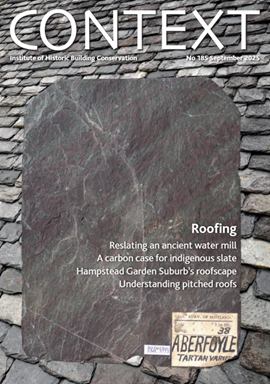
Articles range from slate to pitched roofs, and carbon impact to solar generation to roofscapes
Three reasons not to demolish Edinburgh’s Argyle House

Should 'Edinburgh's ugliest building' be saved?
IHBC’s 2025 Parliamentary Briefing...from Crafts in Crisis to Rubbish Retrofit
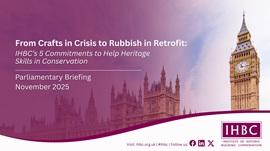
IHBC launches research-led ‘5 Commitments to Help Heritage Skills in Conservation’
How RDSAP 10.2 impacts EPC assessments in traditional buildings

Energy performance certificates (EPCs) tell us how energy efficient our buildings are, but the way these certificates are generated has changed.